The 2026 Oscars once again proved that the Academy Awards are far more than a celebration of winners and trophies. Beyond the spotlight of acceptance speeches, the red carpet and stage became a global platform for cultural expression, advocacy, fashion, and storytelling. From disability visibility and political statements to sustainability in fashion and historic first wins, this year’s ceremony reflected a shifting entertainment landscape where identity, activism, and artistry increasingly intersect.
Entertainment and advocacy came together powerfully as Adam Pearson attended the 2026 Oscars for A Different Man, confidently owning the red carpet. Celebrated for raising disability visibility, he used the global stage to challenge Hollywood stereotypes and represent actors with disabilities. His presence was widely praised by fans and media, reinforcing his role as a cultural figure advancing disability rights in film and storytelling.
View this post on Instagram
The Oscars—and award ceremonies more broadly—are never just about who wins. They are spaces where untold stories, personal histories, and cultural voices come into focus, showing that some of the most powerful moments happen beyond the awards themselves.
Costume designer Malgosia Turzanska embodied this spirit through fashion, wearing a sculptural denim pannier adorned with thousands of safety pins—a foundational tool in her craft. Originating in the 19th century as a simple fastening device, safety pins became essential in costume design for quick adjustments, durability, and precision. By elevating them into a striking red carpet statement, Turzanska celebrated the labor, skill, and ingenuity behind costume creation.
Culture and music also shaped the red carpet. Spike Lee wore Off-White x Air Jordan 4s with a bold blazer and Bottega Veneta cassette bag, blending streetwear and Hollywood glamour. A nod to his Mars Blackmon legacy and Brooklyn roots, his look challenged traditional black-tie norms while celebrating sneaker culture.
Joachim Trier used his acceptance speech for Sentimental Value to urge protection of children in conflict zones, invoking James Baldwin: “All adults are responsible for all children. Let’s not vote for politicians who ignore this.” Meanwhile, Javier Bardem presented Best International Feature Film and declared “No to war and free Palestine,” wearing pins supporting peace and Palestine.
Black Pearl was also present at the Oscars, celebrating the winners and cultural milestones of the evening. Michael B. Jordan won Best Actor for Sinners. Autumn Durald Arkapaw became the first woman—and first woman of color—to win Best Cinematography for Sinners. Cassandra Kulukundis received the inaugural Best Casting Oscar for One Battle After Another. Jessie Buckley became the first Irish woman to win Best Actress for Hamnet, and “Golden” from KPop Demon Hunters became the first K-pop song to win Best Original Song.
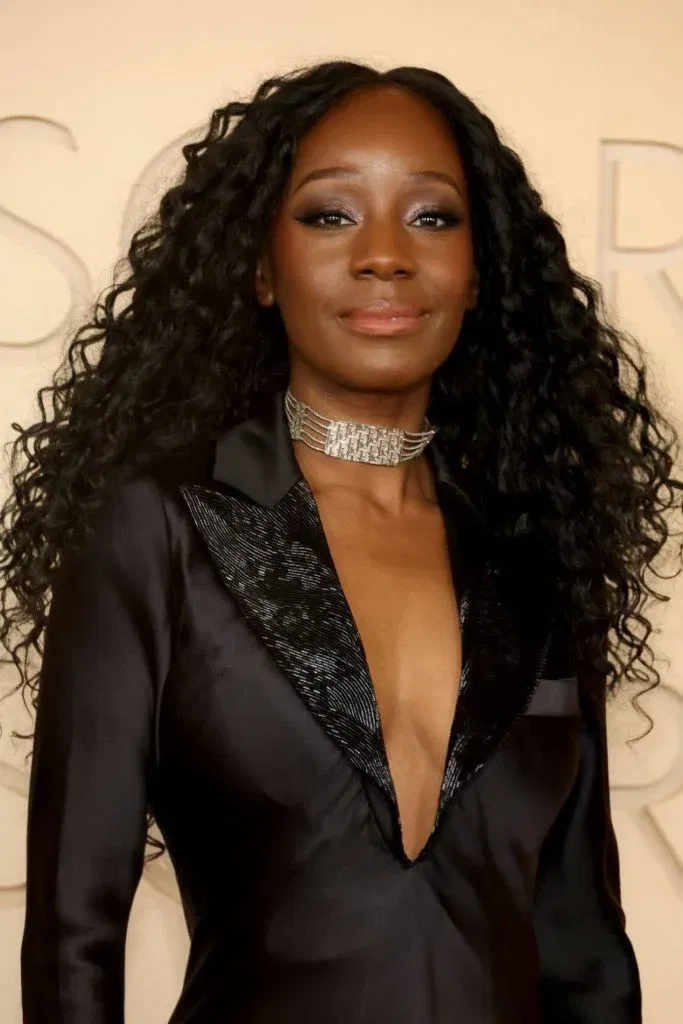
BLACK PEARL’s CEO, author of the Oscars Sustainable Style Guide, attended in borrowed fashion and personal archival pieces. Styled by Kate Foley, she wore an Alexander McQueen gown and Saint Laurent heels from Foley’s wardrobe, paired with a vintage Dior choker and makeup by Fabricio Montes, highlighting a commitment to sustainable red carpet practice.