
When Heritage Walks the Red Carpet
When SZA stepped out in Adinkra symbols in a recent look, the moment landed harder than a styling choice usually does.

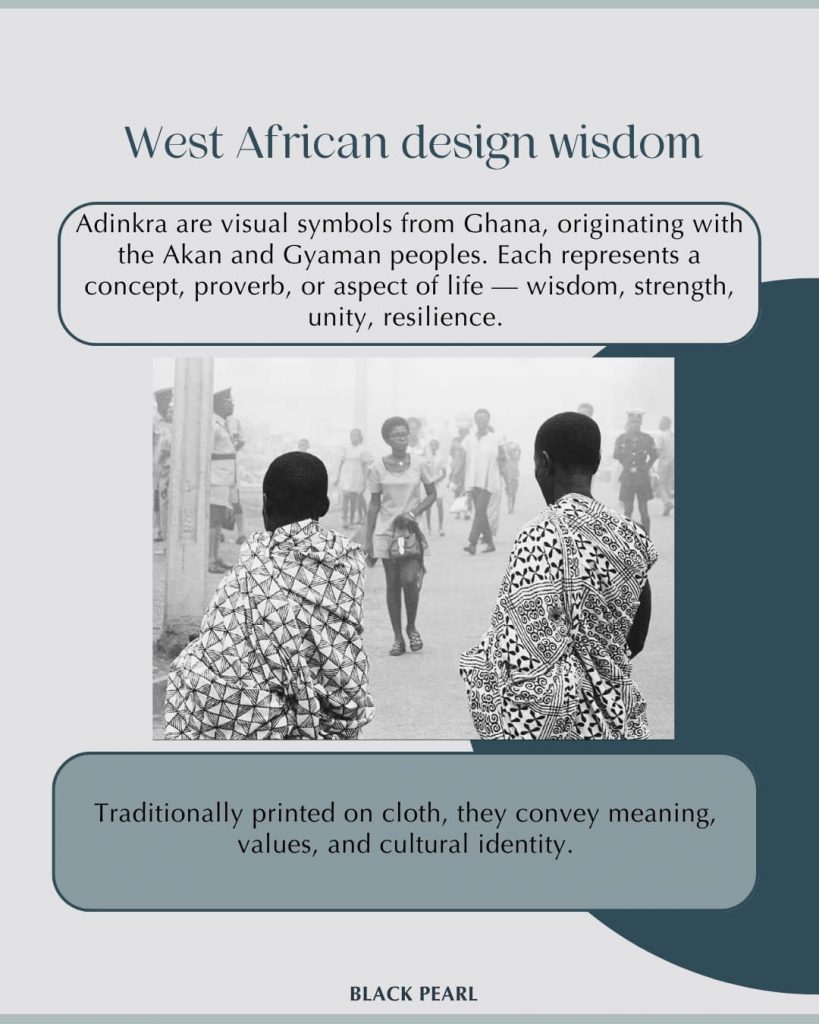
For Ghanaians, those symbols are not decoration. They are language. Each one carries a proverb, a value, a way of moving through the world — passed down by the Akan and Gyaman peoples long before anyone thought to call it fashion. To see them on a global stage, worn by an artist with that kind of reach, is to watch generations of inherited meaning meet the present in real time.
This is what happens when heritage shows up where the whole world is looking. It is powerful. And when it is done with intention — when it opens a door to a deeper conversation rather than closing one — it is more powerful still.
A symbol that moves with you
The thread between culture, sustainability, and what we choose to wear is not new. It is the thinking that built No Single Use Fashion, the campaign founded by BLACK PEARL CEO Samata Pattinson, from its very first day.
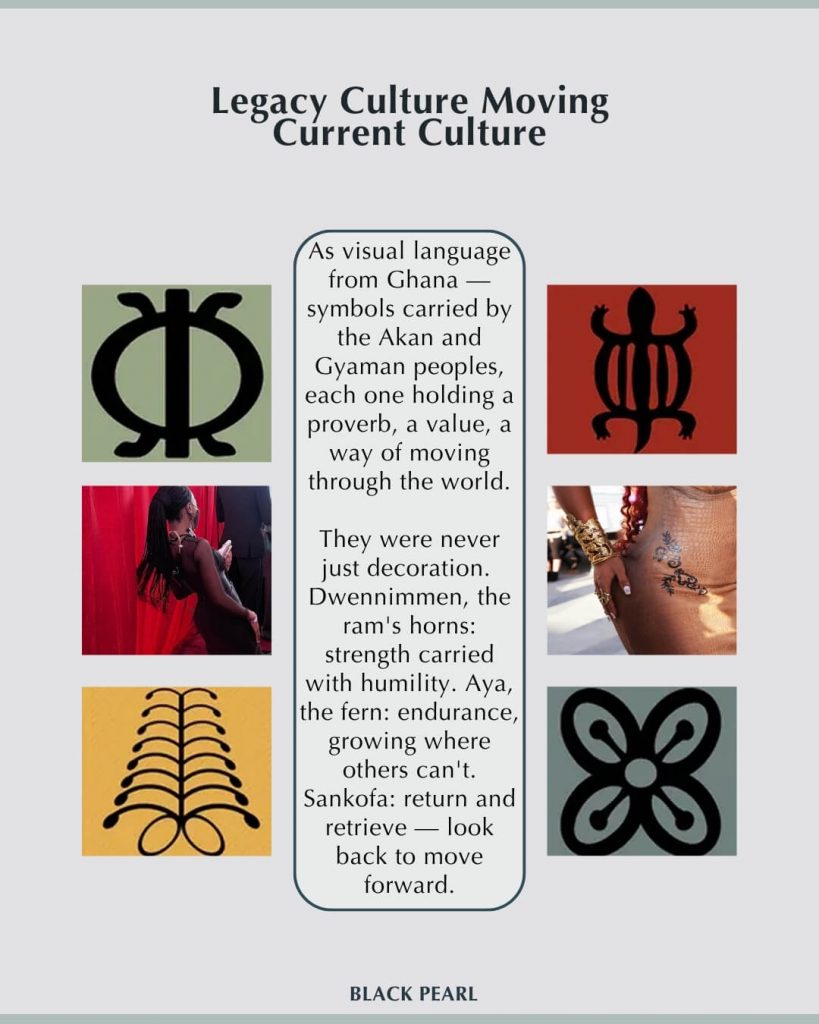
Pattinson, a British-born Ghanaian, carried that thinking onto the Oscars red carpet. Her gown held a beaded Sankofa symbol at its centre. Sankofa: return and get it. Look back in order to move forward. The past is not behind us; it moves with us, stitched into everything made next.
The piece was designed in collaboration with a Nigerian designer at the helm — two women, two heritages, one continent’s memory worn out loud. That is the point of Sankofa. It is not nostalgia. It is continuity. It asks that we retrieve what matters and carry it forward, deliberately.
The cost of forgetting
The wider culture is living through the opposite of Sankofa. It is living through a culture built to forget.
The global fashion industry produces more than 100 billion garments a year. Much of that is fast fashion — engineered for speed, low cost, and relentless trend turnover — and it has trained consumers to treat clothing as disposable. Live music is where this shows most plainly. Every year, an estimated 7.5 million festival outfits are worn once and thrown away, most of them synthetic, most of them bound for landfill, shedding microplastics into the oceans long after the festival is over.
Behind the sparkle sits a hidden cost, paid by people and by the planet. Dyeing and finishing alone account for roughly a fifth of industrial wastewater. Every second, a truckload of clothing is dumped or burned. And the workers who make these clothes too often face low pay and unsafe conditions to meet a demand that never slows.
Why artists matter
This is where artists come in — and why a moment like SZA’s matters beyond the image.

In SZA’s case, the Adinkra look is of a piece with a deeper, long-standing commitment. Her advocacy centres on climate justice and the fight against environmental racism — the unequal burden of pollution, and the unequal access to resources like tree cover, in Black, Indigenous, and communities of colour. Through the TAZO Tree Corps, a partnership with TAZO and American Forests, she helped fund a paid local workforce to plant and maintain urban trees in historically marginalised neighbourhoods across cities including Detroit, Minneapolis, the Bay Area, Richmond, and the Bronx.
She has launched a sustainability-minded merch line aimed at protecting the oceans, sat down with Patagonia to learn about supply-chain and manufacturing sustainability, and used her platform to raise awareness of the environmental cost of artificial intelligence — its carbon footprint, its water use, and the communities that bear the consequences. When an artist with that record wears heritage with intention, the gesture carries weight. It is conviction made visible.
No Single Use Fashion
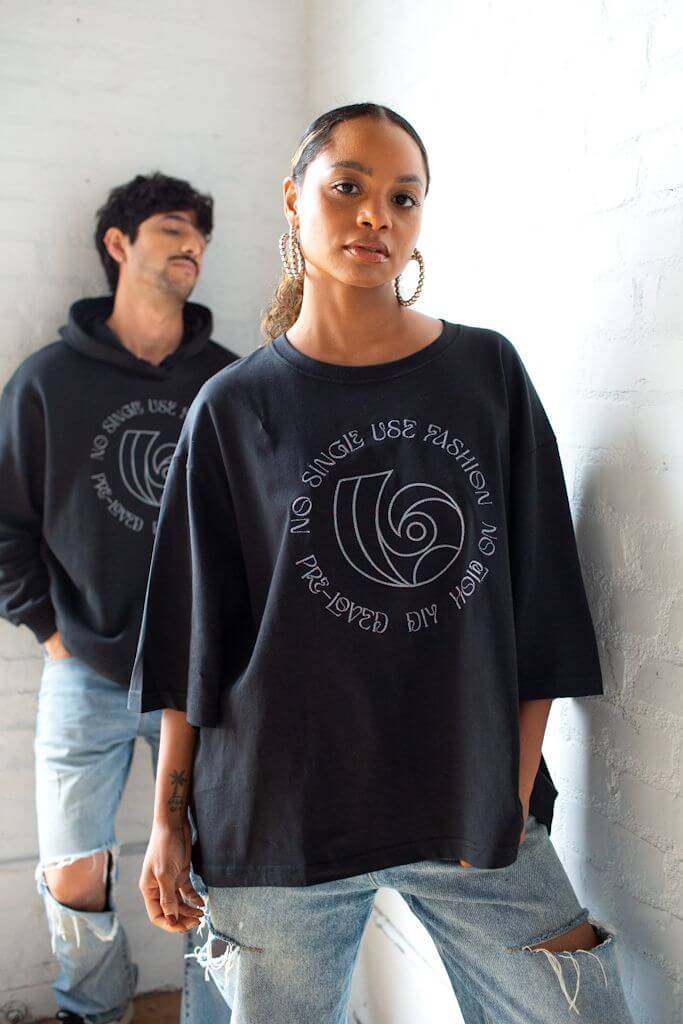
Live music has the power to spark a cultural shift. No Single Use Fashion invites fans and artists alike to pledge a different relationship with what they wear: to rewear, repair, customise, and reimagine — and to turn fashion and music into a force for connection, not consumption.
The cultures NSUF draws from understood something the industry has unlearned. In Ghana, cloth is inherited and remade. In Japan, kintsugi repairs broken ceramics with gold and sashiko reinforces worn fabric with visible, decorative stitching — damage is never hidden, it is honoured. In India, the philosophy of jugaad, ingenious improvisation, runs through textile repair; kantha quilts are built entirely from layered, stitched-together worn saris. Across many Indigenous nations, damaged ceremonial garments are restored by community knowledge-keepers, keeping living history intact.
When heritage walks the red carpet with intention, it does more than look beautiful. It reminds a watching world that the most radical thing anyone can do is hold on to what matters and carry it forward. Sankofa. Return, retrieve, and move forward. That is the work — and it is an invitation to build it together.