Telling artists to “just sing” might seem harmless, but it’s far from neutral. Such advice can unintentionally dismiss their intelligence, overlook the communities and stories they represent, and turn rich culture into something purely decorative. Historically, artists have never existed outside politics. From ancient Greek theatre interrogating power and democracy, to Renaissance patronage entangled with church and state, to 20th-century protest music, art has always functioned as a narrative record of society. Nina Simone described jazz and blues as reflections of Black life under structural racism. Fela Kuti’s music spoke out against Nigerian military rule, and Picasso’s Guernica remains one of the most powerful visual condemnations of fascist violence.
To suggest that artists should stay apolitical overlooks this history and assumes that creativity exists apart from lived experience—which isn’t just historically inaccurate, it also misses the point of why art matters. It’s also a contradiction. Artists are celebrated for capturing our deepest emotions—grief, desire, alienation, hope—with remarkable precision. They’re admired for their emotional intelligence, cultural awareness, and keen observation.
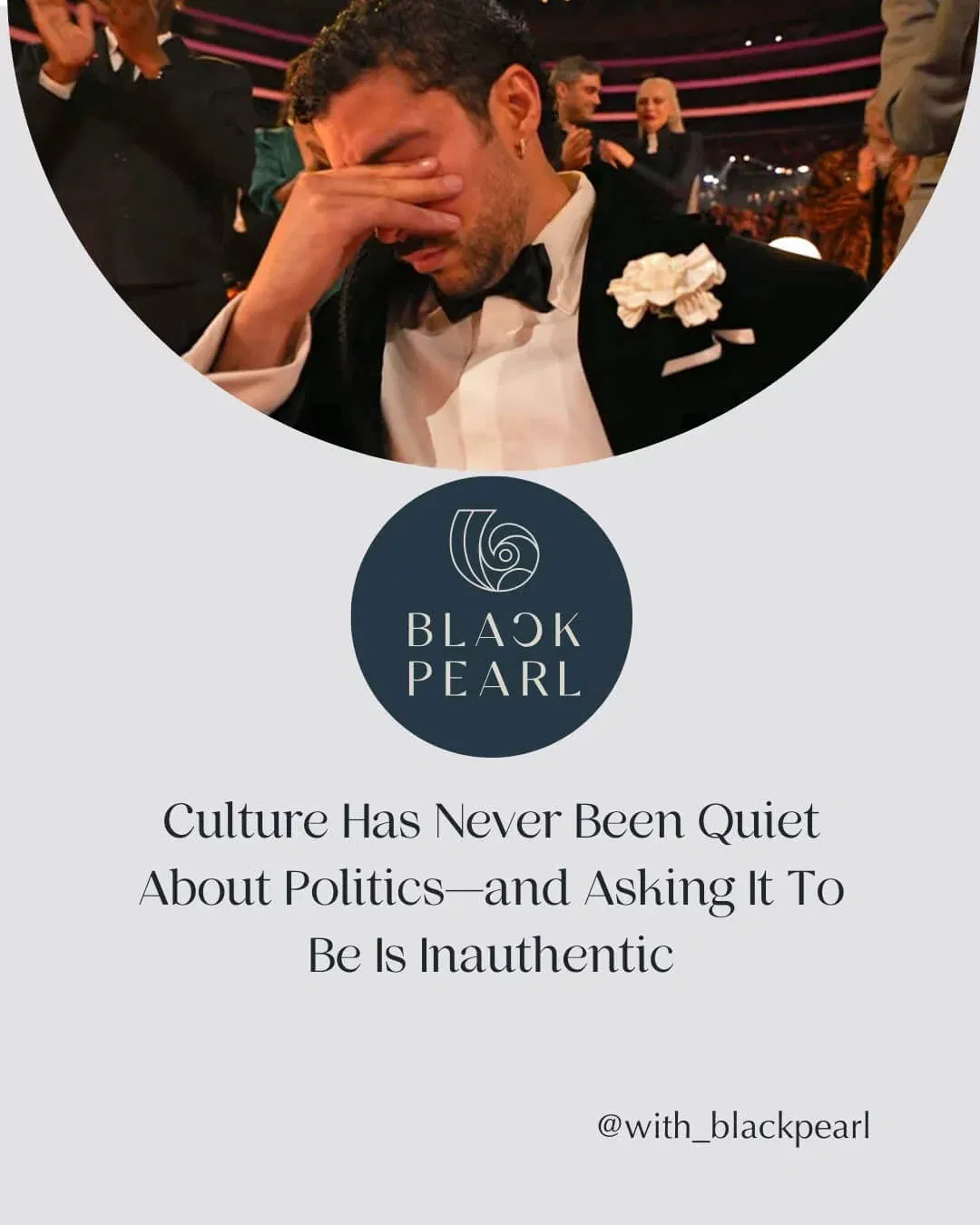
Yet to suggest that these same individuals can’t understand or speak about the social and political forces shaping those emotions doesn’t make sense. Love, fear, anger, and joy do not exist in a vacuum—they are shaped by economics, race, gender, borders, labor, and history. The talent to capture complex emotions in song, film, or fashion is closely tied to awareness of injustice, power, and collective struggle—because these forces shape the very feelings art seeks to express. Asking artists to stay silent assumes that politics only matter when they’re explicitly named. In truth, silence, compliance, or claims of aesthetic “neutrality” often reinforce existing power structures.
Pop culture is no exception. Decisions about visibility, representation, and authorship are inherently political. Through their work, artists give voice to shared experiences, expressing tensions that many communities feel but don’t always have the space to articulate. Culture has always been society’s feedback loop; what has evolved isn’t art’s political nature, but the scale and speed of its circulation.
For instance, protest songs in the 1960s traveled via records and radio, shaping public opinion over months or years—today, a socially conscious music video or viral fashion statement can spark global conversations overnight. When people insist that artists stay silent, it’s often less about protecting art and more about keeping things comfortable—sometimes at the expense of speaking honestly about what’s really happening.