
BLACK PEARL founder and CEO Samata Pattinson moderated “LA, the Oil City,” an intimate evening conversation hosted by ClientEarth, the global environmental law charity that uses the power of the law to protect the planet and the people who live on it. Around 40 guests joined the panel to look at Los Angeles as it rarely sees itself: a city built on oil, shaped by the choices of those who drilled it, and still living with the consequences.
The conversation sat squarely within ClientEarth’s work. Founded in 2007 by lawyer James Thornton and now led by CEO Laura Clarke, the organisation drives systemic change by holding governments and corporations accountable for climate change, nature loss, pollution and environmental harm. Headquartered in London, with offices across Europe and Asia and a dedicated US arm, ClientEarth uses strategic litigation, policy advocacy, legal research and training for judges and legal professionals to enforce environmental law in more than 35 countries.
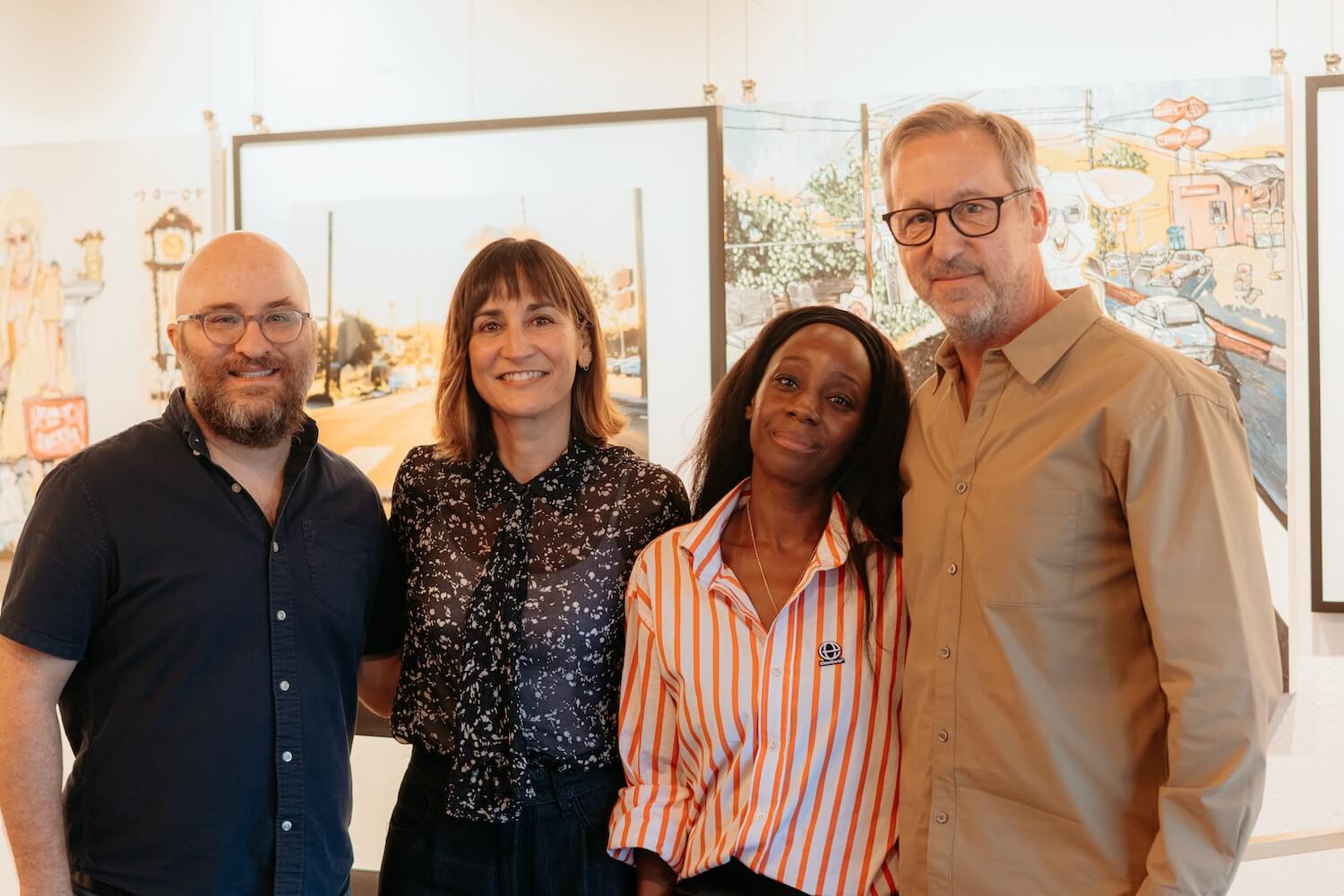
Jonathan Blake, Director of the Planetary Program at the Berggruen Institute and author of the Noema Magazine article that inspired the evening, opened with a walk through the city’s hidden oil landscape: the Packard site, the Cardiff Tower disguised as a synagogue, and the Beverly Center sitting on the Salt Lake Oil Field. The conversation asked why the industry chose to conceal itself, and what that architectural sleight of hand says about what Angelenos are willing to see.
Writer, filmmaker and gallery curator Tim Disney turned to the story the city told instead. While the Gold Rush became American mythology, oil never did, in Los Angeles or nationally. Disney, whose latest book began as a climate novel and became a story about stolen narratives and how to reclaim them, explored what it means for an oil town to see itself as a movie town, and whether art can make extraction felt in ways data cannot.
Danielle Lackey, attorney and Executive Director of ClientEarth USA, brought the conversation to the people who live with the costs. One in three LA County residents lives within a mile of an active or idle well, with harms that include reduced lung function, reproductive and cardiovascular effects, and impacts on mental health. Those harms fall hardest on low-income Black and Latino communities already carrying other exposures. Lackey set out who should pay when oil companies walk away from their wells, and where the law has already held corporations to account, including outcomes in Colorado and litigation involving pension funds.

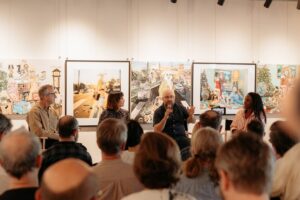

The panel closed on what is now visible. Satellite tools such as MethaneSAT make emissions measurable from space, and the evening examined whether that visibility is changing behaviour, why local bans matter when the problem is global, and how the idea of “bunkerism”, the belief that wealth can shield anyone from a shared crisis, breaks down when climate consequences ignore postcodes.
“Los Angeles likes to think of itself as the city of the future, which means the choices we make here travel,” said Samata Pattinson. “This conversation was about seeing the city clearly: who built it, who paid for it, and who gets to decide what it becomes. None of what we inherited was inevitable. That’s the hopeful part.”
The evening ended with audience questions and a reception.
About BLACK PEARL
BLACK PEARL is a cultural organisation bridging design, fashion, music, entertainment and education. Founded by Samata Pattinson, a Vogue Champion of Change, VOGUE Business 100 Innovator and member of The Independent’s Climate 100 List 2026, BLACK PEARL builds programmes, partnerships and conversations that put people and communities at the centre of how culture shapes the planet.
About ClientEarth
ClientEarth is a global environmental law charity that uses the power of the law to protect the planet and its inhabitants. Founded in 2007 by lawyer James Thornton and led by CEO Laura Clarke, ClientEarth holds governments and corporations accountable for climate change, nature loss, pollution and environmental harm. Headquartered in London, with offices in Brussels, Warsaw, Berlin, Madrid, Beijing, Tokyo and the United States, it works through strategic litigation, policy advocacy, legal research and judicial training across more than 35 countries. Client Earth